
Curriculum
Deeply focused development you can personalize.
A one-year sound and music production program built around projects, personalized development, professional value, and the people and opportunities that help turn ability into momentum.
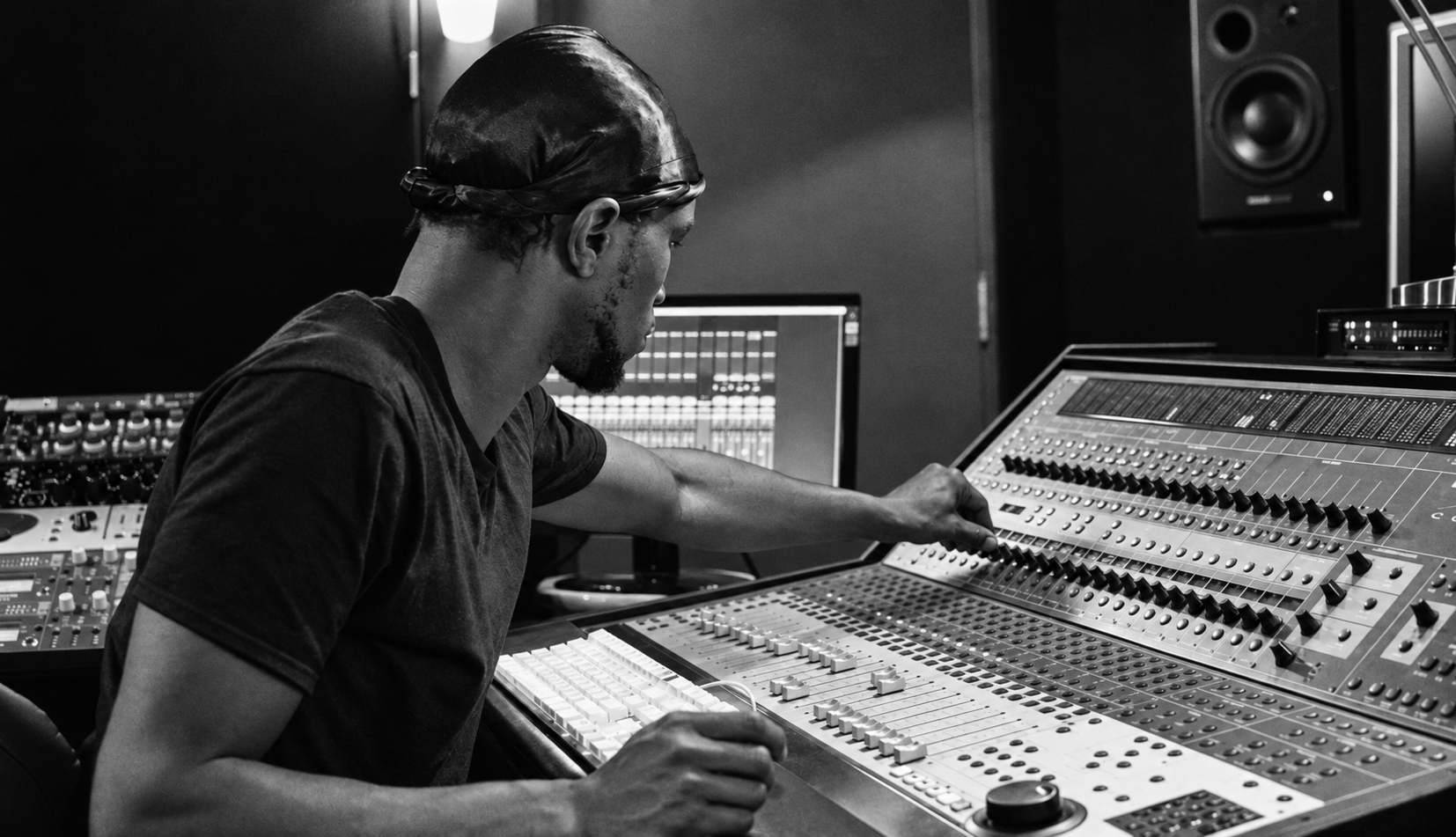
Deeply focused learning you can customize.
In one intensely focused year, RAC gives you the projects, attention, resources and ongoing support to become dramatically more capable.
900 program hours
Deeper and more relevant learning than four years of university, with project-based learning focused on relevant real-world development.
Dont waste time on irrelevent stuff
Project-based learning
900 focused hours of technical training, creative development, and real-world projects designed to build career-ready skills around what you love.
30 class projects
Over the course of a year, you'll complete 30 projects that develop a robust foundation of technical, creative and entrepreneurial skills.
Specialized training that focuses on you.
more block(s) on specialized for you
Lose track of time in studios you'll love
*lose* --> more positive
Love where you learn, and stick around for extra studio time.
At RAC, every day is a hands-on day, between practice activities, labs, and tutorials during class, and extra studio time available outside of class for collaboration and guidance on personal projects.
Fill the gaps that other schools can't
*can't* --> more positive
Private tutoring, tailored workshops, professional feedback and more.
Extra help with areas for improvement; custom workshops covering niche topics critical to your specific path; nuanced feedback on your projects; and ways to personalize your development.
T101 — Acoustics
Overview
T101 introduces acoustics through both conceptual study and applied studio design. Students develop an understanding of how acoustic principles relate to real listening and production environments, then apply that knowledge through a major home-studio design project.
Project — Designing Your Home Studio
Students apply acoustical knowledge to the design of a home studio. The project develops progressively across two graded submissions: an initial submission covering Steps 1–4, followed by a final submission incorporating Steps 1–8.
The project is best classified as practical applied design. Rather than only explaining acoustic concepts, students use those concepts to develop a completed studio-design solution.
Notes
Assessment structure
T101 contains one broader project but two graded project deliverables. This distinction is important when considering workload: the project is continuous, while students encounter more than one formal submission point as it develops.
T102 — Audio Consoles
Overview
T102 focuses on the operational and technical knowledge associated with audio-console work. It differs from the other courses in Block I because the reviewed assessment structure does not identify a separate formal course project.
Notes
Assessment structure
T102 contains no distinct non-exam project submission in the reviewed curriculum. Practical and theoretical competencies are instead assessed through the course's practical and theory assessment structure rather than through a standalone project deliverable.
Why this distinction matters
The absence of a formal project should not be interpreted as an absence of applied learning. It means that this course evaluates its operational skills differently from the surrounding project-based courses. For workload counting, T102 therefore contributes no project or non-exam project deliverable to the Block I totals.
T103 — Music & Computers
Overview
T103 develops computer-based audio and music-production skills through four distinct projects. The work moves across audiovisual production, creative remixing, and commercial-media formats, giving students several different contexts in which to apply digital production techniques.
Project — Sound for Video
Students apply computer-based audio-production skills directly to video. The project requires practical synchronization and production work within an audiovisual context rather than treating audio as an isolated medium.
At the broader-project level, this is classified as practical production: students are actively creating and applying audio to picture.
Project — Remix
Students complete an extended creative-production exercise built around remixing existing musical material. The emphasis is on practical production decisions, arrangement, editing, and the creative use of computer-based music tools.
This is classified as practical creative production. It develops production ability through making and revising a finished creative output.
Project — Radio Ad
Students create an audio advertisement in a recognizable commercial-media format. The project moves beyond an isolated technical exercise by requiring audio-production skills to be applied to a defined communication and media purpose.
Because the resulting work closely resembles a real commercial audio deliverable, this project is classified at the authentic professional / real-world application level.
Project — Video Ad
Students create an advertising project combining audio production with video. The work requires technical and creative decisions to be made in relation to an audiovisual commercial format.
Like the Radio Ad, the Video Ad is classified as authentic professional / real-world application because the assignment format corresponds closely to a recognizable industry deliverable.
Notes
Applied progression within the course
T103 contains four separate projects and four graded project submissions. The sequence moves from direct application of production skills to increasingly recognizable media outputs, with the Radio Ad and Video Ad representing the most occupationally authentic work in the course.
T104 — Signal Processing
Overview
T104 develops signal-processing knowledge through practical mixing work. Rather than assessing EQ, dynamics, and related processing only as abstract concepts, the course requires students to make processing decisions within complete mix contexts.
Project — Frequency & Dynamics Mix
Students apply frequency and dynamics processing within a mix, including practical use of EQ and dynamics tools. The focus is on making technical decisions that affect the balance, clarity, and behaviour of recorded material.
This project is classified as practical technical production because students demonstrate signal-processing knowledge by using it directly within a working mix.
Project — Final Mix
Students complete a broader final-mixing workflow that develops across multiple stages and culminates in a finished mix submission. The workflow includes more advanced production requirements, including vocal tuning, alongside the integration of previously developed mixing and signal-processing skills.
The Final Mix is classified as authentic professional / real-world application because it requires students to integrate multiple techniques into a completed production workflow rather than demonstrate them separately.
Notes
Project counting note
The reviewed course structure shows parallel S1/S2 Final Mix submission folders. These represent the same underlying project rather than two separate projects, so the Final Mix is counted once when describing the curriculum.
Block I progression
T104 concludes the first instructional block with work that requires students to combine technical understanding with practical production judgment. Across Block I as a whole, the curriculum moves from acoustical design and operational foundations into computer-based production, commercial media work, signal processing, and complete mixing tasks.
Your multifaceted career
RAC graduates are leaders in creative industries around the world. From Grammys and Academy Awards, to festival design and Triple A video games, no two career paths are the same.
Applicants have our full support.
No sweeter spot to be.
4 hours of daily focus
Hands-on training and guidance by industry professionals. With small class sizes, your instructors give you the focus you need every day.